Care guides · Dog care & walking
Why Your Dog's Harness Rubs Their Armpits (And How to Fix It)
Dog harness rubbing your dog's armpits? Learn the likely fit issues, four practical checks, when to call a vet, and how to choose a safer harness.

Your dog comes home from a short walk and you notice pink skin just behind a front leg. The harness looks secure, but each step may be dragging a strap or seam over the same spot. A dog harness rubbing the armpits is a fit or friction problem to investigate—not something your dog should simply get used to.
Start with three checks: remove the harness and inspect the skin, see where the chest strap sits when your dog walks, and look for sliding or bunching. A harness that is too small can rub, but so can one that is too loose or badly shaped for your dog's body.
Is it rubbing, or something else?
Look where the strap passes behind each front leg. Early signs can include flattened or broken fur, a repeated scratch at the same point, a narrow pink line, or reluctance to put the harness on. Redness is easier to notice on pale skin; with dark fur, part the coat gently and look for tenderness or dampness.
Do not put the harness back over raw, bleeding, swollen, or painful skin. Ask your veterinarian about open sores, discharge, a strong odor, persistent discomfort, or redness that does not settle. Allergies, skin infections, and other conditions can resemble simple friction. This guide is about equipment fit, not diagnosing a rash.
Photo: Jean Marc Bonnel / Pexels. Harnesses should be checked with the dog standing and moving, not just in a posed photo.
Five reasons harness straps reach the armpits
- The chest strap is positioned too close to the front legs. It may rub the axillary skin every time the leg swings.
- The harness slides forward during walks. A loose girth or unsuitable body shape can let the strap creep into the armpit.
- The front panel changes how the shoulder moves. A strap across the front of the shoulder may limit the normal stride; shape and placement matter.
- Stiff edges or bulky seams concentrate friction. Wet fur, sand and dirt may make that contact more irritating.
- Your dog has outgrown it. Puppies, weight changes and a coat trim can change how an otherwise familiar harness sits.
A soft-looking padded vest can still chafe. Padding helps only when the underlying fit and position are right.
A four-step fit check before your next walk
1. Take measurements again
Measure according to the specific manufacturer's size chart, usually including the broadest part of the chest just behind the front legs. Some models require a neck measurement as well. Do not assume that a medium in one brand matches another. For the complete sizing process, see our dog harness fitting guide.
2. Put it on with your dog standing naturally
Fasten the harness without pulling your dog's forelegs into an unnatural position. Check that each chest or girth strap lies flat, away from the elbow crease, and does not fold or bunch. Buckles and thick seams should not press into the armpit.

Photo: Yaroslav Shuraev / Pexels. Photograph illustrates handling the straps—not a certified correct fit.
3. Watch ten normal steps, then a turn
In a secure space, observe your dog from the side and front while walking, turning and sitting. Does a strap drift forward with each step? Does the entire harness rotate? Can your dog reach forward freely without shortening the stride? Recheck when the leash is gently attached; the fit can change under tension.
4. Check both safety and comfort
Follow the manufacturer's adjustment instructions. There is no universal two-finger rule that proves every harness fits: dog shape, coat thickness and construction vary. The harness must not squeeze, move into sensitive skin, or be loose enough to slip off backward. Never deliberately frighten your dog to test escape resistance.

Photo: Yaroslav Shuraev / Pexels. Check hardware, seams and rubbing points before every walk.
What to change when the harness still rubs
If the strap is too far forward: Try a different harness pattern with more space behind the front legs. For some dogs, a properly fitted Y-front or H-style design may allow comfortable shoulder motion, but no shape automatically guarantees a good fit.
If the whole harness slides around: Recheck the size and adjustment at all intended points. If you must overtighten one strap to keep it in place, the model may not suit your dog's proportions.
If only one side rubs: Check whether the harness is twisted, one strap is shorter, or the leash routinely pulls it sideways. A persistent uneven gait also deserves veterinary evaluation.
If the edge itself is abrasive: Wash and dry the harness as the maker recommends; remove grit and check for rough seams. A different material or design may be needed. Do not cover an active sore with padding and keep walking as usual.

Photo: Andreas Schnabl / Pexels. Check equipment again after wet or sandy outings.
Can you keep walking while the skin heals?
If the skin is irritated, stop using the rubbing harness. Your veterinarian can advise about the cause, wound care and what activity or alternative equipment is safe. Do not apply human ointments, essential oils or adhesive dressings without veterinary guidance. Reintroduce the harness gradually once the skin is comfortable and the fit issue is resolved.
Shopping checklist: choose by fit, not slogans
Look for:
- Multiple adjustment points that suit your dog's actual chest and neck measurements.
- A front design that does not block forward shoulder movement.
- Flat, smooth edges that stay behind the front legs in motion.
- Reliable buckles, secure leash attachment and a suitable escape-resistant fit.
- A clear size chart and the ability to return an unsuitable size.
Explore Kenio walking equipment as options to evaluate against the checklist, not as guaranteed anti-chafe solutions:
- Browse available dog collars, harnesses and leashes — check sizes, construction and current availability before ordering.
If an individual item is unavailable, browse dog essentials and walking gear.
Frequently asked questions
Why does my dog's harness rub only one armpit?
The harness may be rotating, one strap may be unevenly adjusted, or your dog may have an asymmetrical gait. Recheck the fit and see a vet if the discomfort persists or your dog moves unusually.
Will a larger harness stop chafing?
Not necessarily. A larger harness can slide forward and rub more. Choose a size and design based on the manufacturer's measurements and how it fits while moving.
Is a padded harness always better for sensitive skin?
No. Soft fabric over the wrong area still creates friction. Strap placement, stability and freedom of movement come first.
How can I tell whether it is too tight or too loose?
A too-tight harness may leave pressure marks or restrict movement; a loose one may twist, creep forward or allow escape. If adjustment cannot resolve both concerns, change the model.
Bottom line: Take skin irritation seriously, examine the strap position during motion, and choose a harness that fits your dog—not simply the size printed on a label.
Sources and further reading
- VCA Animal Hospitals: Controlling Pulling on Walks — characteristics of a well-fitting H/Y harness, chafing and shoulder motion.
- Kenio: How to Fit a Dog Harness — sizing and safety checks in more detail.
- Photography: Jean Marc Bonnel, Yaroslav Shuraev, Yaroslav Shuraev, Andreas Schnabl / Pexels.
Comments
No comments yet. Be the first to contribute.
Related stories
Pet care information is general guidance. Contact a veterinarian for health concerns.

Care guides · Dog care & walking
How to Fit a Dog Harness: Sizing, Comfort and Safety Checks
Learn where to measure a dog for a harness, how to check shoulder movement and rubbing, and what to inspect before every walk.
Read story →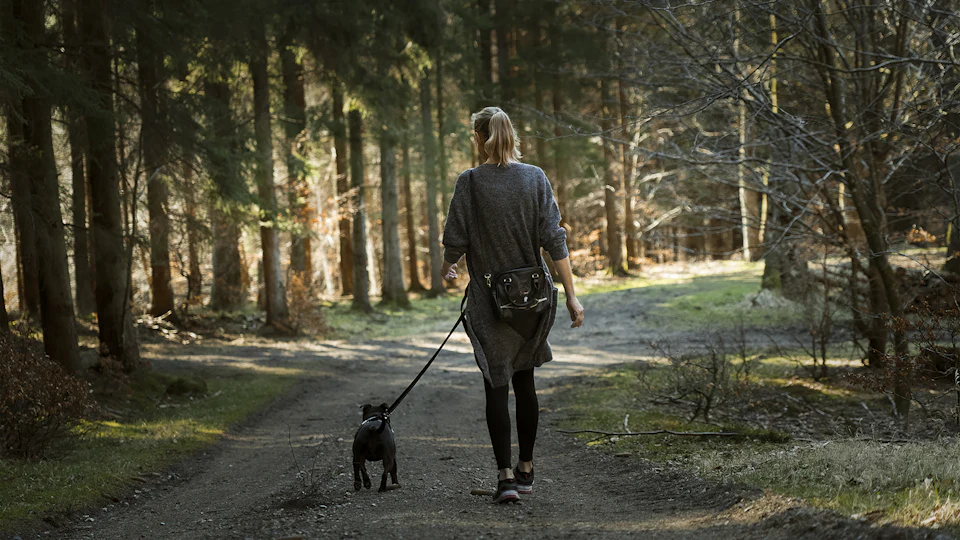
Tips & how-to · Dog care & walking
Dog Walking Essentials: A Practical Everyday Checklist
What to bring on an everyday dog walk: leash and harness fit, waste bags, water, visibility and a simple pre-walk equipment check.
Read story →
Buying guides · Dog care & walking
Dog Leash Types and Lengths: A Guide for Everyday Walks
Compare standard and retractable dog leashes, clip quality, handle comfort and leash length for different walking environments.
Read story →