Care guides · Small pets
Rabbit Enrichment Ideas at Home: Safe, Simple Things to Try
Try low-cost rabbit enrichment ideas using cardboard hides, hay and gentle foraging, with practical safety checks for an indoor rabbit space.

A cardboard box that cost nothing may interest your rabbit more than the toy you carefully chose online. That's not a failure of shopping. It is a clue about what rabbits like doing.
Rabbits are curious animals with natural motivations to hide, explore, forage, chew and dig. Good enrichment gives them safe ways to express those behaviors. It doesn't have to be expensive, and it should never replace enough space, suitable food or companionship.
Start with the space, not the toy
Before adding anything new, look at your rabbit's living area. Is there room to move freely? Can your rabbit retreat to a secure hiding place? Are electrical cables, houseplants, cleaning products and small swallowable objects out of reach?
A toy cannot compensate for a cramped, stressful setup. Rabbits need opportunities for movement and rest, plus constant access to appropriate hay and fresh water. If you're not sure whether a plant, wood species or material is safe, ask a rabbit-savvy veterinarian before offering it.
1. Make a cardboard hiding place

Choose a plain, sturdy cardboard box, remove tape, staples, labels with heavy adhesive and any plastic windows, then cut smooth entrances large enough for your rabbit to pass through comfortably.
Many rabbits appreciate a hide with more than one exit so they don't feel trapped. Set the box somewhere dry and easy to monitor.
Watch what happens. Some rabbits lounge inside. Others sit on top or chew the edges. If your rabbit is swallowing large pieces of cardboard, remove the box and offer a safer alternative. Cardboard should be an activity—not a meal.
2. Turn a cardboard tube into a hay puzzle
A plain, uncoated paper tube can be a simple foraging toy. Fill it loosely with your rabbit's usual hay so pieces can be pulled out without effort.
Do not block the tube with tape, string or a hard cap. Avoid narrow openings where a head or limb could become stuck. Supervise the first few uses, especially if your rabbit likes to shred things into small pieces.
The point isn't to make food difficult to obtain; hay should still be freely available elsewhere. Think of the tube as a short activity rather than a feeding system.
3. Let your rabbit forage


Place small portions of appropriate leafy greens or ordinary food in a few safe locations around the exercise area. Start where your rabbit can easily find them.
Foraging creates little moments of exploration. It should not require jumping dangerously high, reaching into tight gaps or earning food through stress.
Introduce any dietary changes gradually and follow your veterinarian's advice. Not every vegetable is suitable for every rabbit. Never use treats to replace the hay-based diet your rabbit needs.
4. Offer a safe digging area
Some rabbits love pushing and digging through loose material. A low-sided container with clean hay or untreated shredded paper may provide a useful outlet.
Avoid scented material, dusty substrates, cat litter, clumping products and anything your rabbit might ingest in unsafe amounts. Choose a container with no sharp edges and enough room to turn around.
Watch how your rabbit interacts with the digging area and remove it if they try to eat inappropriate material. Different rabbits have different preferences; there is no need to force interest.
5. Rotate a few simple objects
Rather than filling the entire room with toys, offer a small selection: a safe tunnel, a cardboard hide, a suitable chew item and a food puzzle. Move or swap one item occasionally while keeping familiar resting spots consistent.
Abruptly rearranging everything may unsettle some rabbits. Notice which items prompt relaxed exploration and which are ignored. A toy that gets little attention isn't automatically a bad purchase—your rabbit may simply prefer a different texture or activity.

Photo: Ajay Lakshman / Unsplash.
Materials to avoid
- Cords, string, elastic bands and loose ribbons that can tangle or be swallowed.
- Tiny bells, detachable plastic parts or soft fillings that could be chewed off.
- Painted, heavily printed, coated or strongly glued cardboard.
- Treated wood or unknown branches that may be unsafe to chew.
- Toys with narrow spaces that can trap a rabbit's head or limbs.
Supervision matters: inspect items regularly. Throw away wet, dirty, damaged or sharp-edged pieces. Even materials commonly suggested for rabbits are not risk-free for every individual animal.
How to tell whether an activity helps
Look for relaxed investigation: sniffing, gentle chewing, moving between hiding places or calmly searching for hay. Let your rabbit choose whether to participate.
Stop an activity that leads to repeated frantic escape attempts, aggressive guarding, obvious fear or unusual behavior. Sudden changes in eating, droppings or activity can be medical concerns requiring urgent veterinary attention; they are not a cue to add more toys.
Small-animal hideout to consider
- Browse available small-pet accessories — check sizes, construction and current availability before ordering.
Quick answers
Are cardboard boxes safe for rabbits?
Plain cardboard can be used for supervised enrichment when it has no staples, tape, coating or hazardous attachments. Monitor chewing and remove it if your rabbit eats excessive amounts.
Do rabbits need expensive toys?
No. Simple boxes, appropriate hay puzzles and safe hiding places can provide useful stimulation. More expensive does not necessarily mean more enriching.
Can I use cat or dog toys?
Only if the material, size and construction are suitable for rabbits. Many cat and dog toys contain small plastic parts, squeakers or fillings that can pose risks.
A simple starter setup
Begin with one stable hide with two openings, a hay-filled tube and enough clear floor space for movement. Observe your rabbit over several days before adding more. Keep cleaning and safety checks part of the routine.
If you're learning how to organize care for different pets, our everyday pet cleaning guide explains why matching tools to surfaces matters more than collecting gadgets.
The takeaway: The best enrichment is safe, easy to maintain and interesting to your rabbit—not necessarily the most elaborate toy.
Further reading and safety guidance
Comments
No comments yet. Be the first to contribute.
Related stories
Pet care information is general guidance. Contact a veterinarian for health concerns.

Care guides · Small pets
Rabbit Hay Feeder Placement: Easy Access, Clean Hay and Safety
Where to keep rabbit hay, what to check in a feeder and how to encourage natural foraging without restricting daily access.
Read story →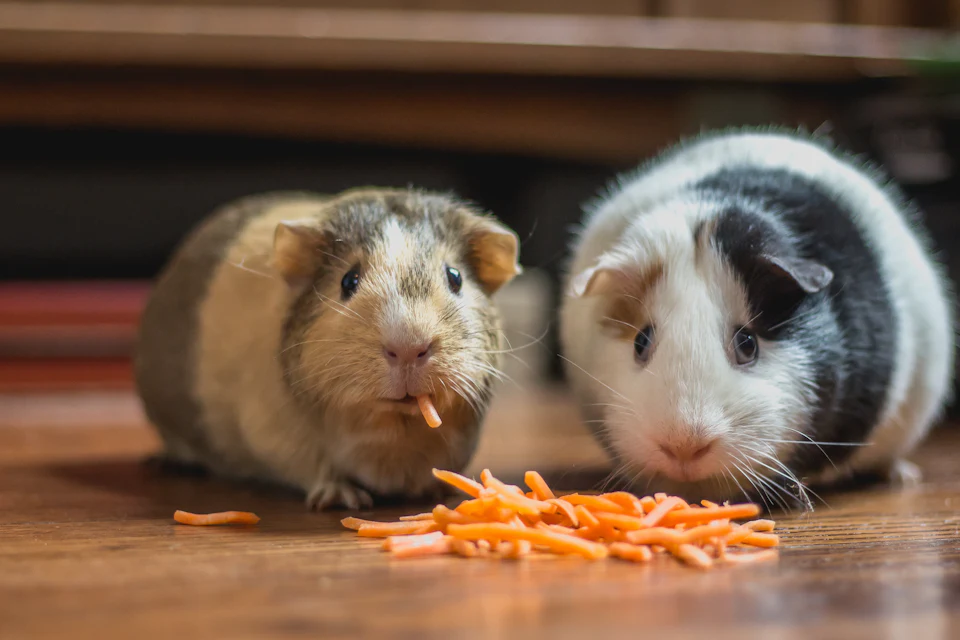
Tips & how-to · Small pets
Guinea Pig Habitat Setup: Space, Hay, Hideouts and Bedding
Plan a safer guinea pig home with space for exercise, unlimited feeding hay, multiple hides, easy-clean bedding and daily checks.
Read story →