Care guides · Cat care
Why Does My Cat's Litter Box Still Smell After Cleaning?
Litter box still smells after scooping or washing? Find the source in the litter, tray, mat or floor with a practical cat-safe cleaning checklist.

Quick answer: If your cat's litter box smells soon after cleaning, the source may be waste left in the litter, urine caught in scratches or seams, a damp mat or nearby floor, poor airflow, or an underlying toileting problem. More perfume usually does not solve the cause. Scoop thoroughly, clean the box with a suitable mild product, inspect the surrounding area and check whether your cat is using the box normally.
The key is to find where the odor is coming from before replacing the litter, buying a deodorizer or hiding the box inside a cabinet.
Find the odor source before buying anything

Photo: Nadiye Odabaşı / Pexels. Check the tray, entrance and floor for waste or dampness.
| What you smell or notice | Possible explanation | What to check first |
|---|---|---|
| Ammonia-like smell shortly after scooping | Wet litter or urine remains in the box or on nearby surfaces | Corners, stuck-on clumps, litter level, seams and floor edges |
| Smell strongest inside a covered box | Poor airflow or waste accumulating out of sight | Remove the hood during an appropriate cleaning/observation period |
| Smell returns immediately after a full wash | Old, scratched plastic, hidden seams, or floor contamination | Inspect the dry empty tray and surrounding floor |
| Smell comes from the entrance | Tracking mat, fabric enclosure or litter trapped below | Lift, inspect, clean and completely dry the mat |
| Strong smell even with very frequent cleaning | Changes in urination, stool or litter-box habits | Watch your cat and contact a veterinarian if anything is abnormal |
| Strong fragrance but still an unpleasant smell | Scented litter or cleaner masks rather than removes odor | Try a cat-appropriate unscented routine rather than adding scent |
These are possible causes, not a diagnosis based on smell. Do not ignore a sudden change in urination or toileting behavior.
The cleaning routine that addresses the cause
1. Scoop thoroughly, not just the visible surface
Remove stool and urine clumps at least daily; some cats and multi-cat homes need more frequent attention. Check the edges and bottom for clumps that break apart when lifted. A scoop with suitable slots can help separate clean granules from waste.
The VCA Animal Hospitals guidance on house soiling recommends keeping the box clean and avoiding cleaners that leave a strong residual smell. A cat may avoid a box that smells clean to humans but unpleasant to a cat.
2. Replace exhausted litter when needed
Clumping and non-clumping litter behave differently. Follow the litter maker's directions, observe when absorbency or clump integrity deteriorates and change the full litter as appropriate. Adding new litter on top of saturated old litter does not restore the box. Do not switch litter type abruptly if your cat is already comfortable with the current one.
Cats Protection recommends considering the cat's preference for texture and generally choosing unscented litter over perfumed options. Perfume can discourage some cats from using the box.
3. Wash the empty tray safely
Empty the box; wash hard surfaces using warm water and mild, cat-appropriate dish soap unless the manufacturer instructs otherwise. Gently scrub corners and seams. Rinse thoroughly so no cleaning residue remains. Dry completely before replacing fresh litter.
Never mix bleach with ammonia, urine or other cleaning chemicals. Avoid strong fragrances and cleaners likely to leave residues; keep the cat away until the box is fully rinsed, dry and safe to use. The CDC's pet-supply cleaning guidance distinguishes routine cleaning from disinfection. Some situations call for additional disinfection, but methods should follow veterinary and product instructions—not improvised chemical combinations.
4. Clean the floor and mat, not only the box
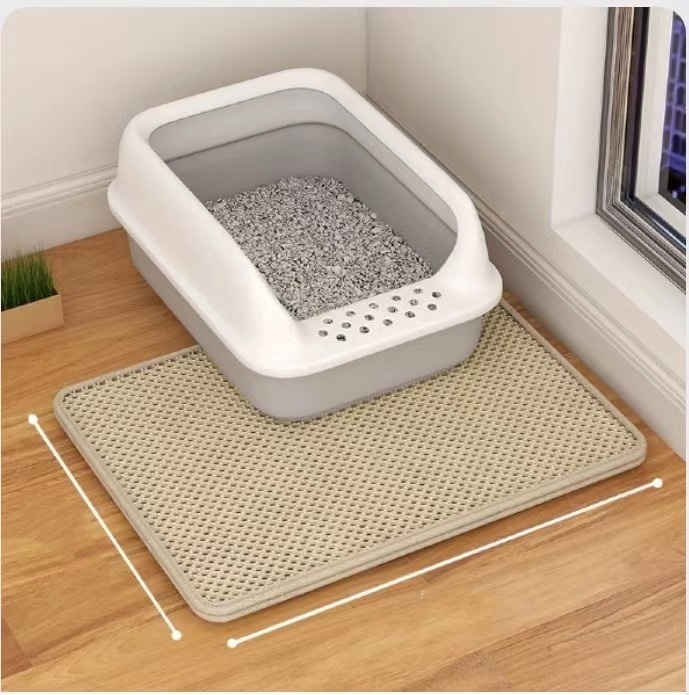
Product image: Kenio double-layer litter mat. Inspect the underside and wash according to its material; a mat is not an odor remover.
Sometimes the worst odor comes from the floor, the lip beneath the box or an absorbent mat. Lift the mat completely and inspect the underside. Clean it according to its materials and care label; dry it thoroughly before replacing. Check baseboards and hard-to-reach corners if urine may have escaped.
A suitable double-layer cat litter mat can help capture tracked granules, but a litter mat is not an odor-control device. See our separate guide on stopping litter tracking to choose a setup that follows your cat's exit route.
5. Inspect the box itself
Deep scratches, chipped surfaces, poorly sealed seams and difficult-to-clean corners can retain residue. If the box smells when it is clean and dry, consider replacing it with a smoother design that you can reach and wash easily.
A high-sided cat litter box with scoop is one example to inspect if your cat regularly sprays or digs over the edge; make sure the entry is still comfortable, especially for senior cats. The product is not a proven solution for medical urinary problems.
Covered versus open: does the lid trap smell?

Photo: Pexels. The cat's willingness to enter and leave a box matters more than how discreet it looks.
A lid may reduce the odor a human notices across the room while concentrating it inside the box. That difference matters to a cat with a sensitive sense of smell. Removing the hood temporarily can help you inspect whether the issue is airflow, cleaning or feline comfort.
Our open vs covered litter-box guide compares box size, entry, airflow and observed preferences. Do not force a cat into a covered box just to keep the room looking tidy.
Location matters more than air freshener

Photo: Unsplash. An illustrative household litter setup, not evidence of a specific odor-control performance.
If the box is crammed inside a tiny sealed cabinet, you may create a poor-ventilation problem. A quiet, accessible spot with suitable airflow is often more useful than a hidden one, provided the cat can always reach it.
In a small apartment, keep litter away from food and drinking water, avoid noisy appliances, and make sure other pets cannot guard the entrance. Our small-apartment litter-box placement guide includes a room-by-room comparison.
A practical 72-hour odor audit
Day 1 — Reset: Scoop, replace exhausted litter, wash and dry the tray, clean the floor and the mat, and note the time and location of any odor. Do not change every product simultaneously if you are trying to learn your cat's preference.
Day 2 — Observe: Record when your cat uses the box and where the smell returns. Check the tray, mat and floor separately. If the box is covered, consider a supervised open-versus-covered observation while keeping a familiar alternative.
Day 3 — Adjust one variable: Move the box to a better-ventilated yet accessible location, replace an odor-holding tray, or review the litter type—one change at a time when possible. If odor persists despite careful cleaning or your cat acts differently, seek professional advice.
This audit is a household checklist, not a scientific odor measurement and not a reason to postpone veterinary care.
What smell can tell you—and what it cannot
Unusually strong-smelling urine, frequent tiny urinations, straining, blood, crying in the box, accidents or a sudden change in habits can indicate a health problem. A cat straining to urinate or unable to pass urine may need emergency veterinary care, particularly a male cat. Never assume a cleaner or scented litter will address that.
The VCA guide to inappropriate elimination explains why medical and behavioral causes both need consideration when toileting changes.
Frequently asked questions
Why does my litter box smell like ammonia even after I scoop?
Urine-soaked litter may remain, clumps may have broken apart, or urine may be on the tray, floor or mat. Inspect the whole setup, not only the obvious waste.
Will baking soda, charcoal or an air freshener fix the smell?
Some odor-control products may change how people perceive a smell, but none replaces removing waste or washing contaminated surfaces. Follow the product's pet-safety guidance and avoid exposing your cat to strong fragrances, loose powders or items they might ingest.
Is a stainless-steel litter box automatically odor-free?
No material prevents waste odor. A nonporous, smooth surface may be easier to maintain, but seams, scratches, cleaning frequency and the cat's comfort still determine how well the setup works.
How often should I empty all the litter?
It depends on whether the litter clumps, the manufacturer's instructions, the number of cats and whether the litter is still absorbing effectively. Scoop at least daily and replace the litter as needed. There is no universal safe schedule that fits every home.
What if my cat refuses to use the newly cleaned box?
Check for strong cleaner residue, a sudden litter change, a covered entry, insufficient space or an unfamiliar location. A sudden refusal, especially with urinary symptoms, warrants veterinary advice.
Sources and scope
- VCA Animal Hospitals — Cat Behavior Problems: House Soiling: cleaning, odor-retaining old trays and box preferences.
- VCA — Inappropriate Elimination Disorders in Cats: medical and environmental causes of box avoidance.
- Cats Protection — Choosing Cat Litter: unscented litter and cat preferences.
- CDC — Cleaning and Disinfecting Pet Supplies: cleaning methods and when additional disinfection is indicated.
Editorial note: This is a practical maintenance and observation guide, not a veterinary diagnosis or a test comparing particular litters or cleaning products. Keep chemical products out of reach and contact your veterinarian for changes in urinary or bowel habits.
Comments
No comments yet. Be the first to contribute.
Related stories
Pet care information is general guidance. Contact a veterinarian for health concerns.

Care guides · Cat care
Why Is My Cat Water Fountain Slimy? Clean the Pump & Filter
Why does a cat fountain feel slimy? Learn how biofilm forms, safe pump and filter maintenance, cleaning schedules and ways to reduce buildup.
Read story →
Care guides · Cat care
How to Cat-Proof a Christmas Tree in a Small Apartment
A small-apartment Christmas tree safety plan for cats: stop tipping, protect cords, remove dangerous ornaments and create safer play alternatives.
Read story →
Care guides · Cat care
Cat Won't Drink From a New Water Fountain? 9 Fixes That Help
Cat refusing a new water fountain? Diagnose pump noise, placement, taste and fear, then try a gentle introduction without removing their trusted water bowl.
Read story →