Care guides · Cat care
Why Is My Cat Water Fountain Slimy? Clean the Pump & Filter
Why does a cat fountain feel slimy? Learn how biofilm forms, safe pump and filter maintenance, cleaning schedules and ways to reduce buildup.

Quick answer: The slippery film inside a cat water fountain is often biofilm—microorganisms attached to a wet surface—although visible residue can also include food debris or mineral deposits. A filter does not replace washing the reservoir, spout, tubing and pump parts. Unplug the fountain, follow its maker's disassembly instructions, gently wash accessible surfaces, rinse thoroughly, replace the filter as directed and refill with fresh, safe drinking water.
If slime comes back quickly, look for missed crevices, a dirty pump, water left standing, warm placement, and unsuitable cleaning intervals rather than assuming a new filter alone will fix it.
What is the slippery film?
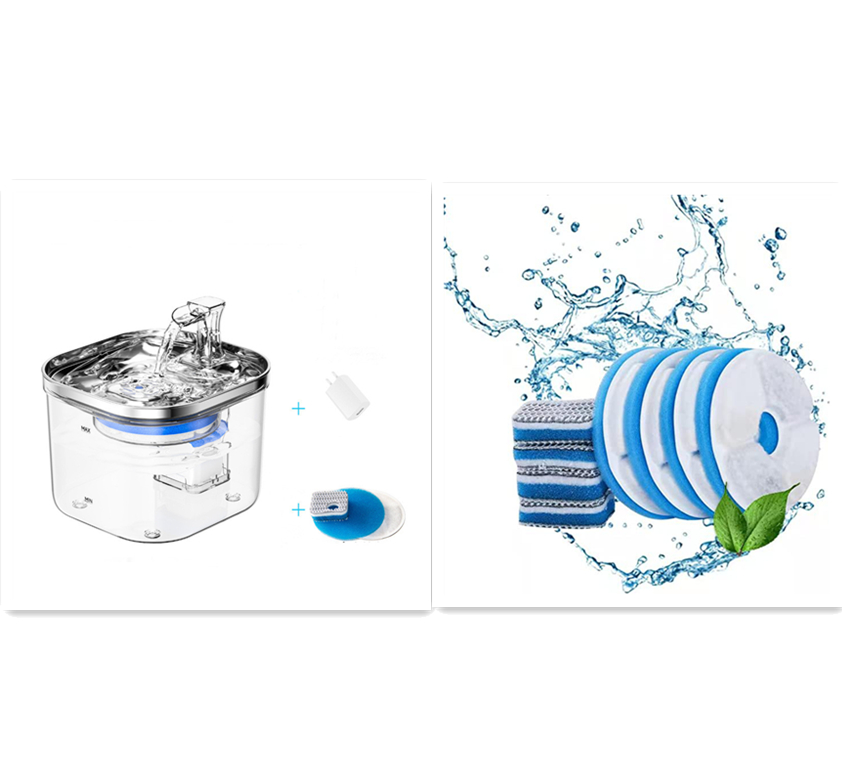
Product image: Kenio circulating stainless-steel pet fountain. Check the actual model's cleaning instructions; image does not demonstrate biofilm.
Pet water fountains circulate water through surfaces that receive saliva, fur, tiny food particles and minerals. Petlibro explains that microorganisms can form a sticky biofilm on those surfaces. The appearance of residue alone cannot identify a species of bacteria or prove a water source is safe or unsafe.
| What you notice | Possible cause | Sensible first action |
|---|---|---|
| Slippery film around the spout or bowl | Biofilm and residue | Wash and scrub surfaces accessible under the manual |
| Weak flow or new pump noise | Fur, clogged passage or deposits | Inspect the pump and impeller if the model allows it |
| Chalky white buildup | Hard-water mineral deposits | Check the maker's approved descaling instructions |
| Filter looks dirty or smells | Filter has trapped debris beyond its useful life | Replace according to that exact model's guidance |
| Green or colored buildup | Light exposure, contamination or another residue | Stop using until fully cleaned; inspect water source |
| Slime returns soon after a wipe | Pump, tubing or crevices were missed | Complete a full manufacturer-approved disassembly and cleaning |
A filter can help capture some material, but running water is not automatically clean water. The International Cat Care caregiver guidance calls for fountains to be regularly disassembled and thoroughly cleaned, with filters replaced according to the manufacturer.
How to clean the fountain safely
Step 1: Unplug and move the cat to a clean water source
Disconnect electricity with dry hands before touching the pump or wet components. Offer your cat a freshly cleaned ordinary bowl while the fountain is out of service. You should never have to leave a cat without accessible drinking water during maintenance.
Step 2: Empty the water and separate removable parts
Discard old water. Remove the drinking tray, lid, spout and filters in the order shown in the user manual. Do not guess how to open a sealed pump housing, cut wiring, or submerge any charger or power supply.
Different manufacturers use different impellers, filters and electrical layouts. The Catit PIXI fountain cleaning guide illustrates how some models allow the pump cover and impeller to be removed for brushing; this is not a universal instruction for every fountain.
Step 3: Wash the reservoir and accessible surfaces
Use warm water, a soft sponge and mild, unscented detergent appropriate for the equipment, following the product manual. Pay attention to the underside of the spout, joins, corners and channels where residue accumulates.
Avoid abrasive scouring pads on finishes that scratch easily. Scratches can make future cleaning harder. Rinse until all suds and cleaner smell are gone.
Step 4: Clean the pump exactly as designed
Where allowed, gently clean the pump cover, impeller well and removable impeller using a suitable small brush. Do not run a pump dry. Do not force parts to separate.
Manufacturer schedules differ: PetSafe advises cleaning some pumps at least monthly, with more frequent attention in some multi-pet homes; Catit recommends a biweekly pump-cleaning routine for its Mini Flower model. Follow the instructions for the actual fountain you own, and clean sooner when it becomes dirty.
Step 5: Handle filters and mineral deposits separately
Do not scrub a disposable filter with detergent in place of replacing it. Replace or rinse the filter only as its manufacturer instructs. Filter life varies by model, water quality and number of pets.
White chalky scale is not the same problem as slippery biofilm. Some manufacturers recommend a limited diluted-vinegar soak for compatible removable parts, followed by thorough rinsing; others restrict cleaning agents or materials. Check the exact manual. Never mix vinegar with bleach, and never mix household cleaners together.
Step 6: Reassemble, refill and observe
Let cleaned parts dry or rinse as directed, reassemble the pump securely, replace the clean filter and add fresh water that is safe for human drinking. Confirm the water flows properly, no cable is damaged, and the reservoir does not leak.
If your cat avoids the fountain after cleaning, provide a separate bowl and review flow noise, location, filter preparation and cleaning residue before assuming the cat is stubborn. Our cat refusing a new fountain guide covers gradual introduction.
A realistic maintenance schedule

Photo: Devesh Chander / Pexels. Keep clean drinking water available in a separate bowl while the fountain is being washed.
A practical starting routine is shown below, but it does not override the maker's manual.
| Frequency | Practical task |
|---|---|
| Daily | Check water level, freshness, flow and visible debris; supply clean drinking water |
| Several times a week or sooner when dirty | Inspect the tray and spout and wash if residue appears |
| Weekly or by product instructions | Clean the reservoir and removable parts; inspect filter and pump |
| At the maker's specified interval | Fully clean the pump where permitted and replace filters |
Do not wait for visible slime if the manual recommends more frequent cleaning. More cats, heavier shedding, warm indoor conditions or food particles in the water may justify washing more often.
The CDC advises washing pet water bowls daily. A fountain is more complicated than a bowl because it has additional wetted parts; use the fountain's own instructions for component-specific care.
Why does slime return after a new filter?

Photo: Alex Dos Santos / Pexels. Illustrates access to drinking water, not a fountain filter or an example of pump disassembly.
Because the filter is only one component. If a pump housing, groove or tube remains coated with residue, that surface still needs to be cleaned. Replacing a filter cannot scrub an inaccessible channel.
Other possible contributors include a sunny placement, food bowls immediately beside the fountain, or topping up old water repeatedly rather than refreshing it. Petlibro recommends a well-aired location away from direct sunlight and regular full maintenance.
What if the pump is rattling or flow is weak?
Stop the unit and check water level, intake obstruction, fur and buildup under the manual. Never run an empty pump to test it. If the motor overheats, wiring is damaged, an electrical smell develops or water reaches protected electronics, stop using the fountain and contact its manufacturer.
Stainless steel, ceramic or plastic: which cleans best?
There is no material that prevents biofilm altogether. Smooth, accessible surfaces are often easier to inspect than narrow internal channels, but pump access, spare filters, seals, and verified cleaning instructions matter more than material labels alone.
If you are comparing equipment, Kenio has an automatic circulating stainless-steel pet fountain to inspect. Confirm its actual model, filter compatibility and maintenance instructions before buying; Kenio has not independently measured bacterial growth or cleaning performance on this model.
For additional options, explore feeding and water accessories without assuming all models have the same filter. Keep a regular bowl available as an alternative. Our fountain vs bowl comparison explains the trade-offs, while VCA's feline hydration guidance emphasizes fresh, clean drinking water.
When to talk to your vet

Photo: Vasilissa Popil / Pexels. Observe drinking habits and seek veterinary advice when they change suddenly.
Unusual thirst, suddenly drinking much less, repeated vomiting, lethargy, or changes in urination should not be explained away as “just a dirty fountain.” A veterinarian can assess the cat and advise whether an illness, water aversion, or both may be involved.
Frequently asked questions
Is cat water fountain slime always dangerous?
Visible slime indicates maintenance is needed, but appearance alone cannot identify a pathogen or quantify health risk. Clean the fountain promptly, provide fresh water, and consult your veterinarian about symptoms or concerns.
Can I just add clean water on top?
No. Topping up does not remove residue or contamination from the existing water and surfaces. Empty and clean the equipment at the intervals appropriate to your model.
Does a charcoal filter stop slime?
Not by itself. Filter media can address some water impurities, but cannot physically clean pump crevices, wetted tubing or the reservoir. Follow the manufacturer's replacement and washing instructions.
Should I use bleach, vinegar or dishwasher detergent?
Only if the manufacturer explicitly approves the method for the exact component. Do not mix cleaning agents, do not submerge electrical parts and always rinse compatible cleaned pieces thoroughly.
Why is my fountain slimy after only a few days?
Possible contributors include residual buildup in the pump, multiple pets, warm placement and infrequent water changes. Review all wetted surfaces and instructions; if it repeatedly returns or the fountain cannot be safely cleaned, ask the manufacturer about repair or replacement.
Sources and editorial scope
- International Cat Care — Encouraging Your Cat to Drink: cleaning and filter changes for pet fountains.
- Catit — PIXI Mini Fountain Cleaning Guide: example of model-specific pump disassembly.
- PetSafe — How to Clean Your Pet Fountain Pump: accessible pump cleaning and buildup.
- Petlibro — Preventing Slime in a Pet Fountain: biofilm explanation and maintenance.
- CDC — Cleaning and Disinfecting Pet Supplies: water-container hygiene.
Editorial note: Brand cleaning intervals and disassembly diagrams above are examples specific to those brands, not instructions for an unspecified Kenio fountain. Always follow the exact product's manual, and seek veterinary care for illness symptoms.
Comments
No comments yet. Be the first to contribute.
Related stories
Pet care information is general guidance. Contact a veterinarian for health concerns.

Care guides · Cat care
How to Cat-Proof a Christmas Tree in a Small Apartment
A small-apartment Christmas tree safety plan for cats: stop tipping, protect cords, remove dangerous ornaments and create safer play alternatives.
Read story →
Care guides · Cat care
Why Does My Cat's Litter Box Still Smell After Cleaning?
Litter box still smells after scooping or washing? Find the source in the litter, tray, mat or floor with a practical cat-safe cleaning checklist.
Read story →
Care guides · Cat care
Cat Won't Drink From a New Water Fountain? 9 Fixes That Help
Cat refusing a new water fountain? Diagnose pump noise, placement, taste and fear, then try a gentle introduction without removing their trusted water bowl.
Read story →