Buying guides · Dog care & walking
Best Reflective Gear for Walking a Black Dog at Night
Walking a black dog at night? Compare reflective harnesses, visible leashes, LED accessories and handler gear with practical safety checks.

Quick answer: For a black or dark-coated dog on a nighttime walk, start with a properly fitted reflective harness or collar, a visible fixed-length leash, and reflective or lit gear for the person holding the leash. Add an active LED accessory where outside light is limited. Reflective material only works when light reaches it; an LED only works while it has power. Neither prevents a traffic accident on its own.
Dark fur can blend into an unlit background. That makes it especially useful to check whether a dog is noticeable from the front, side and behind, not just whether a product looks bright in an online photo.
The most useful night-walk gear, ranked by purpose

Photo: Tim Durgan / Pexels. Night-walking scene; not a controlled visibility test.
| Gear | What it helps with | Limitation to check |
|---|---|---|
| Reflective harness or collar | Makes part of the dog's outline easier to notice when illuminated | A thin strip can disappear under long fur or winter clothing |
| Reflective fixed-length leash | Shows the connection between the dog and the handler under external light | Does not illuminate itself |
| Secure LED collar light or tag | Adds a point of light when the dog is in a dark area | Battery, attachment, weather protection and viewing angle matter |
| Reflective layer on the handler | Helps another person notice the walker as well as the dog | It must remain visible from the relevant direction |
| Flashlight or headlamp | Helps the handler see potholes, debris and the route ahead | Light should not dazzle others or replace physical control |
The American Kennel Club's leash guide recommends reflective material for walking near roads at night and cautions that thin retractable cords are difficult to see. The AKC's harness guide discusses reflective harnesses and LED options.
Why a reflective collar may not be enough for a black dog

Photo: Erik Mclean / Pexels. Reflective coverage should be assessed from several directions.
A dark dog can be hard to distinguish from dark pavement, vegetation or clothing. A small reflective collar may help from one angle, yet be hidden by thick fur or a winter coat. It can also turn away from an approaching light source when the dog changes direction.
For that reason, look for useful reflective area on the dog's body, not only a tiny trim at the neck. Ensure the hardware fits and does not rub; the best reflective surface is not worth an unsafe or escape-prone harness.
Our dog harness fit checklist explains strap placement and escape checks. If the dog wears a coat, use the coat-over-harness guide to keep leash attachment and movement safe.
Reflective or LED: which does a black dog need?
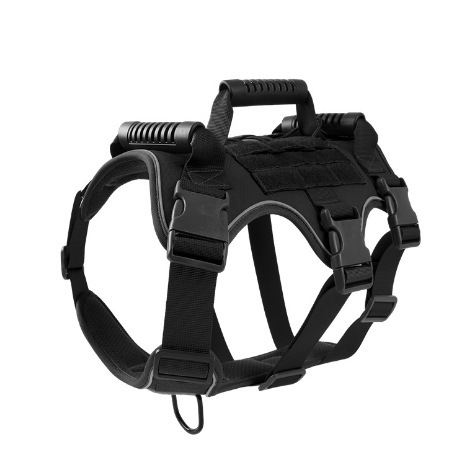
Product image: Kenio reflective dog walking harness. Assess actual fit, reflective trim and the selected variant; no visibility distance is claimed.
Reflective and LED products do different jobs.
- Reflective material returns incoming light toward its source. It is useful near streetlights, a flashlight or headlights, but does not generate its own glow in complete darkness.
- LED gear produces its own light while working. It can help mark the dog's position when other light is absent; its usefulness depends on battery, placement and the angle from which it can be seen.
- A handheld light helps you inspect the ground and identify hazards, which a glowing collar cannot do for you.
For poorly lit routes, a combination can be sensible—not because combining products makes you “100% visible,” but because each covers a different limitation. The AAHA winter-walking guide recommends reflective clothing or collars when walking before or after daylight.
Read our reflective versus LED dog leash comparison for buying details, battery care and weather considerations. This article focuses on where the visibility gear belongs on a dark-coated dog.
A visibility check you can do without going near traffic
This is a practical household observation, not a certified visibility test:
- Put the dog's walking equipment on as normal, checking that all clips and fasteners are secure.
- In a safe private area away from traffic, have another adult hold the dog while you view the setup from front, side and rear at a modest distance.
- Use a flashlight from several angles to see which reflective sections return light. Do not shine a beam into the dog's eyes.
- Switch on any LED accessory and check for blind spots, loose attachment or a light hidden beneath fur or clothing.
- Have the dog walk a few slow steps on a secure route and check whether the gear shifts or disappears beneath the coat.
- Repeat if you add a winter jacket or raincoat; the clothing may cover most of the reflective surface.
Do not use a public road, moving cars or a risky crossing to test gear. A flashlight check does not predict what any driver will see in a real-world emergency.
The best setup for different walking environments
| Walking situation | Good starting equipment | Extra precaution |
|---|---|---|
| Neighborhood sidewalk near vehicles | Reflective harness/collar, fixed-length reflective leash, visible handler | Short, controlled leash; choose protected crossings |
| Dark park with little outside light | Secure LED dog light plus the usual leash/harness | Bring a separate light for the ground and stay on known paths |
| Wet or rainy evening | Reflective walking set and weather-appropriate active light if needed | Inspect manufacturers' actual water-resistance instructions |
| Early winter morning | Visible harness and reflective handler layer | Check pavement for ice and salt; keep cold exposure appropriate |
| Dog wearing a thick coat | Visible reflective surface on the outside, compatible restraint below or above | Never clip the leash to decorative jacket hardware |
A dog with little training, a strong pulling habit or a history of escaping equipment needs safe restraint and route planning first. Brightness alone does not provide control.
Reflective leash vs retractable leash at night
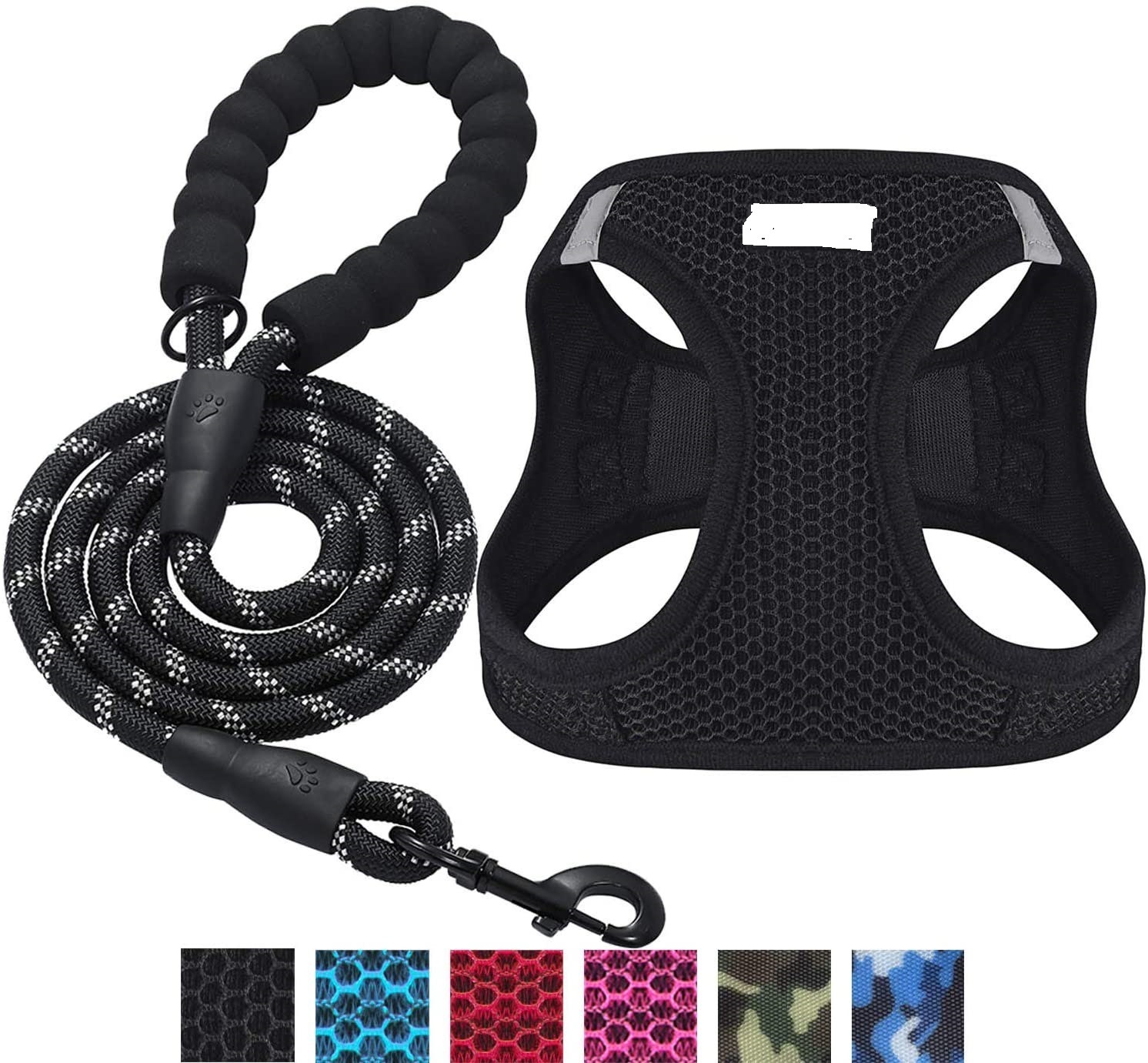
Product image: Kenio reflective nylon leash. Product photo is for comparison, not a certified nighttime visibility measurement.
A narrow cord can be nearly invisible to a pedestrian or cyclist crossing the dog's path, even when the dog's collar is lit. A fixed-length leash with a visible, broad strap can make it easier for the handler to keep the dog close in busy places.
This is not a blanket ban on retractable leashes in every setting. It is a nighttime traffic-control decision: short and predictable control is particularly valuable around intersections, parking lots and shared pathways. The AKC's retractable-leash guidance explains concerns about thin cords, long extension and leash injury.
What to check before buying reflective equipment
- Actual reflective placement: Where does trim appear when the dog walks and turns?
- Fit and escape security: Can the dog back out of the harness? Is a collar too tight or loose?
- Leash hardware: Are the clip, stitching and handle sturdy for the dog's size and strength?
- Visibility of the human: Does the handler have a reflective element, too?
- Weather instructions: Are lights, batteries and ports rated for the anticipated exposure?
- Care and wear: Can the reflective surface be kept clean without damaging the material?
Kenio has examples of a reflective breathable dog harness and a reflective nylon walking leash. Compare the exact size and variant. These are products to evaluate, not products Kenio has independently tested for visibility distance or traffic protection.
For category browsing, see reflective dog-walking accessories.
Common mistakes to avoid
Only lighting the collar: If the rest of the dog and handler are dark, a light may show a point but not clearly reveal the dog's size or the leash line.
Using a jacket that hides everything: A winter coat can cover reflective harness panels. Recheck the actual visible areas after dressing the dog.
Assuming LED means waterproof: A glowing accessory may still be damaged by rain or washing. Follow its published care and weather limits.
Relying on any advertised “visibility distance”: Unless the manufacturer provides meaningful test conditions, a number on the package is not a guarantee. Lighting angle, weather, motion and observer position all change the result.
Forgetting the route: The safest choice is often a well-lit, lower-traffic path with predictable crossings. Gear is only one part of that plan.
Frequently asked questions
Are black dogs harder to see at night?
Dark fur can blend into dark surroundings, so adding conspicuous gear can be especially helpful. The degree of visibility depends on the background, available lighting and where gear is placed—not coat color alone.
Should I choose a reflective vest or a light-up collar?
A reflective vest or harness provides visible area when lit from outside; an LED accessory produces light itself. They are complementary, and fit, control and route safety still come first.
Will a reflective dog leash glow in total darkness?
No. Standard reflective material needs incoming light. For areas without outside light, an active light may be useful alongside reflective equipment.
What color should my dog's nighttime harness be?
Choose visible, documented reflective sections and a sound fit rather than assuming a named fabric color guarantees visibility. What matters is the equipment under the real lighting conditions you use.
Is a reflective leash enough to keep us safe near cars?
No. Traffic speed, visibility, road design, driver attention, weather and dog behavior all matter. Keep your dog controlled, choose safe crossings and remain alert.
Sources and limitations
- American Kennel Club — Choosing the Right Dog Leash: reflective leash use near roads and limits of thin retractable cords.
- American Kennel Club — Choosing a Dog Harness: reflective harness materials and LED accessories.
- AAHA — Safely Walking Your Dog in Winter: reflective gear for short winter days.
- American Kennel Club — Retractable Leash Safety: cord visibility and control limitations.
Editorial note: The visibility checklist is a practical self-assessment, not laboratory performance data or a certification that any equipment makes a dog visible to every road user. Kenio has not conducted independent visibility-distance tests on the linked products.
Comments
No comments yet. Be the first to contribute.
Related stories
Pet care information is general guidance. Contact a veterinarian for health concerns.

Care guides · Dog care & walking
Senior Dog Mobility at Home: 12 Ways to Help an Aging Dog
Help a senior dog move safely at home with non-slip floors, lifting harnesses, accessible beds, vet-backed tips and a practical mobility checklist.
Read story →
Care guides · Dog care & walking
72-Hour Pet Emergency Kit: Dog & Cat Go-Bag Checklist
Build a 72-hour pet emergency kit for dogs and cats. Get a practical go-bag checklist for storms, power outages and evacuations, plus CDC-backed tips.
Read story →
Care guides · Dog care & walking
Dog Boots Keep Falling Off? How to Measure Paws and Fix the Fit
Dog boots keep slipping or twisting? Measure front and back paws, troubleshoot straps and fit, and choose more suitable winter boots.
Read story →