Buying guides · Cat care
Are Automatic Cat Litter Boxes Safe? Sensors, Pinch Risks and Buyer Checks
What a 25-product comparison test found about automatic cat litter boxes, plus practical checks for pinch protection, sensor limits, plugs and cleaning.

An automatic litter box sounds like a perfect upgrade: less scooping and a cleaner tray between visits. But it also introduces moving parts, detection sensors and electrical equipment close to an animal that cannot read warning labels. Treat pet safety as the first buying criterion, not an optional feature.
What independent consumer testing reported
A January 2026 report in China Consumer News described a Shanghai Consumer Council comparison of 25 automatic litter boxes. In the reported electrical safety checks, 22 of 25 samples passed all items; three had foreign-standard plug compatibility concerns for the tested local context. In simulated anti-entrapment tests, two samples failed to stop in all five assessed scenarios, raising potential pinching risks. The study also found substantial variation in continuous operation and waste-bin capacity.
These are results for the tested products and the standards used in that market—not a pass/fail rating for every current US model. The important lesson is to examine the safety architecture rather than relying on a glossy app or marketing video.
Five safety questions to ask
- How does the box detect an entering cat? Look for clear documentation of weight, motion or infrared sensing and what happens when a cat returns during a cleaning cycle.
- Does movement stop when the cat approaches or enters? Read independent tests and user instructions; avoid enclosed mechanisms that can trap an animal.
- What are the weight and age limits? Small kittens and lightweight cats may not reliably trigger some weight sensors.
- Can the device run safely on your electrical supply? Use only an appropriate plug and approved adapter arrangement for your region; don't improvise wiring.
- How can the owner stop and clean it? Look for accessible power controls, easy disassembly following instructions and realistic cleaning steps.
No automatic sensor guarantees safety under every condition. Supervision during the introduction period is important.
Match the box to the cat
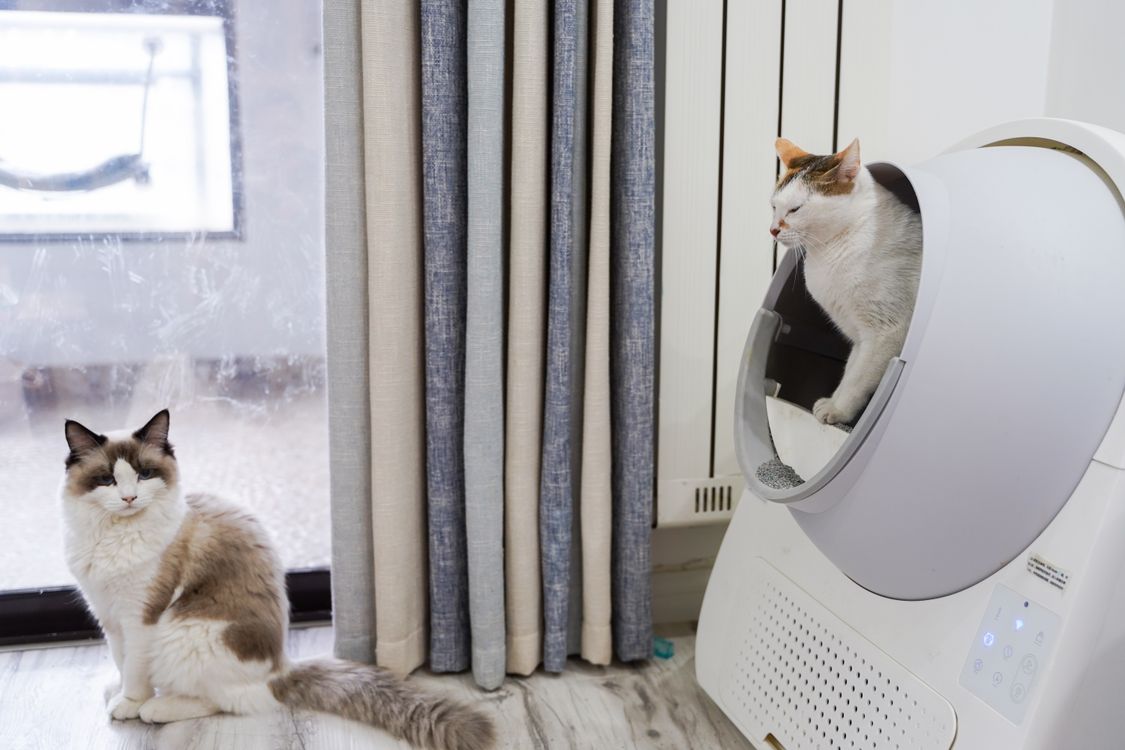

Large cats need enough usable room to enter, turn and dig. Senior cats may need a lower entrance. Timid cats can be unsettled by mechanical noise or moving parts. If your cat already prefers a simple open tray, a more complex machine may not improve its bathroom habits.
Avoid automatic operation for a kitten below the maker's stated minimum age or weight. If the manufacturer cannot clearly explain those limits, choose a conventional box.
Introduce an automatic box in stages
Put the new unit near an existing clean litter box. Leave the old tray available. Initially keep the device switched off while the cat investigates it. Allow familiar litter where compatible, then introduce cleaning cycles only as instructed and while monitoring the cat's response. Do not force a frightened cat through a doorway or remove its familiar toilet too early.
If the cat avoids the machine, stop and reassess. Consider our open vs covered box comparison before buying another design.
Maintenance still matters
Check waste drawers, seals, sensors and accessible moving parts according to the manual. Automatic scooping does not eliminate hand cleaning or the need to monitor urine and stool. A full bin, blocked sensor or power outage can leave the box unusable. Keep a conventional litter box available as a backup, especially during travel.
When not to self-diagnose a litter issue
Frequent straining, blood, repeated trips with little urine, vocalizing during urination or sudden avoidance deserve veterinary attention. A cat unable to urinate may require emergency treatment. Do not blame a new machine for every change.
Does a premium price mean safer sensors?
No. Request the specific safety features, operating limits and credible tests for the exact model.
Are odor controls enough to justify switching?
They may reduce maintenance inconvenience, but do not compensate for poor access, trapped odor or safety concerns.
Can I leave my cat alone because the box is automatic?
No. In-person care remains necessary for feeding, hydration, welfare and equipment failures.
Litter-cleaning tools (not automatic litter boxes)
- Browse available pet cleaning and litter supplies — check sizes, construction and current availability before ordering.
Further reading and safety guidance
Comments
No comments yet. Be the first to contribute.
Related stories
Pet care information is general guidance. Contact a veterinarian for health concerns.

Care guides · Cat care
Why Is My Cat Water Fountain Slimy? Clean the Pump & Filter
Why does a cat fountain feel slimy? Learn how biofilm forms, safe pump and filter maintenance, cleaning schedules and ways to reduce buildup.
Read story →
Care guides · Cat care
How to Cat-Proof a Christmas Tree in a Small Apartment
A small-apartment Christmas tree safety plan for cats: stop tipping, protect cords, remove dangerous ornaments and create safer play alternatives.
Read story →
Care guides · Cat care
Why Does My Cat's Litter Box Still Smell After Cleaning?
Litter box still smells after scooping or washing? Find the source in the litter, tray, mat or floor with a practical cat-safe cleaning checklist.
Read story →