Buying guides · Dog care & walking
How to Choose a Dog Brush for Short, Long or Curly Fur
Best brush for Yorkies? Compare pin brushes, slickers and metal combs for short puppy cuts and long silky coats, plus safe detangling steps.

A brush that works beautifully on a short-haired dog can snag the coat of a fluffy one. Some “deshedding” tools also remove more than loose hair when used too aggressively.
Instead of chasing a best-seller label, start by understanding the coat under your hand and the kind of grooming your dog tolerates.
Short, smooth coats
For a short, smooth coat, try a gentle grooming glove or a soft, short-bristled brush. The aim is to collect loose fur and check the skin without scraping it.
Brush in the direction the hair grows. Apply light pressure. If your dog pulls away, look for a gentler tool and shorter sessions.
Best brush for Yorkies (Yorkshire Terriers)
A Yorkshire Terrier's fine, hair-like coat has different grooming needs from a short, shedding coat. A pin brush and a metal comb are useful starting tools for gently maintaining longer Yorkie hair; a suitable slicker brush may help with carefully worked tangles when advised for the individual coat. The American Kennel Club's Yorkie grooming guide also names these tools and emphasizes regular brushing to prevent mats.
For a short 'puppy cut': Begin with a gentle pin brush, then check for snags with a fine-to-medium metal comb. Concentrate on areas behind the ears, at the collar and under the legs.
For a long, silky coat: Work in small sections and gently support the hair near the skin while detangling, using a product suitable for dogs if your groomer recommends it. Do not repeatedly drag a deshedding blade through fine Yorkie hair.
If you find a tight mat: Do not yank it or cut it out with household scissors. A professional groomer can advise on safe removal, especially close to the skin.
How often? Several short sessions each week are a useful starting point; long coats may need daily attention. Adjust to the actual coat length and your groomer's advice. Regular comfortable maintenance matters more than collecting a large amount of hair in one session.
Is a slicker brush or pin brush better for a Yorkie?
For everyday upkeep of a silky, longer coat, a gentle pin brush plus a metal comb is a sensible combination. A slicker may help certain tangles, but size, pin flexibility and technique matter. If the brush scratches skin or your Yorkie pulls away, stop.
Yorkie brush selection: a coat-length decision table
| Your Yorkie's coat | Start with | Check the result with | Avoid |
|---|---|---|---|
| Short puppy cut | Soft pin brush and short, gentle sessions | Fine-to-medium metal comb, especially behind ears | Harsh repeated strokes on skin |
| Medium pet trim | Pin brush used in sections | Comb from roots to ends, without tugging | Skipping friction areas under the harness |
| Long, silky coat | Pin brush suited to fine hair; detangling help when recommended by a groomer | Metal comb through each small section | Pulling a knot straight through |
| Tight mat close to skin | Stop brushing that spot | Ask a professional groomer to assess safe removal | Household scissors or forceful dematting |
A four-step Yorkie detangling check
- Part the hair. Work in small sections rather than sweeping the surface of the coat. Hold the hair gently close to the roots so your dog does not feel every tug.
- Start at the ends. Ease apart minor tangles only if they release without resistance; pause and reward calm cooperation.
- Verify with a comb. If a metal comb still catches, the section is not fully detangled. Do not force the comb against the skin.
- Check friction zones. Look behind ears, under the collar, in the armpits and around the chest where a walking harness may rub.
A pin brush is not a universal winner: a short-coated Yorkie with sensitive skin may tolerate a gentler brush, and a long coat may need professional advice about detangling products. The AKC's Yorkshire Terrier grooming guidance describes regular brushing with a pin brush, metal comb and an appropriately used slicker. Choose the gentlest method that leaves your individual dog's coat comfortable.
Shopping checklist: rounded or skin-friendly pins, a handle you can control without gripping too hard, a metal comb with smooth teeth, easy-to-clean construction, and sizing appropriate to a small dog. Browse pet grooming tools only after deciding what your dog's coat actually requires.
Medium-length coats that shed
A bristle brush or suitable comb may help remove loose hair. Some dogs also benefit from a gentle undercoat tool, but the coat and skin must tolerate it.
Lift small sections and check underneath for tangles. Do not keep raking the same spot to collect a bigger pile of fur. Redness or discomfort means stop.

Photo: Eric Prouzet / Unsplash.

Photo: Vidak / Unsplash.
Curly or continually growing coats
Curly coats can hide knots near the skin. A properly chosen slicker brush and comb may help keep small tangles from becoming dense mats.
Don't yank through a mat. Painful matting close to the skin is best assessed by a qualified groomer or veterinarian. Household scissors can easily cut skin concealed beneath a tangle.
Long coats and double coats
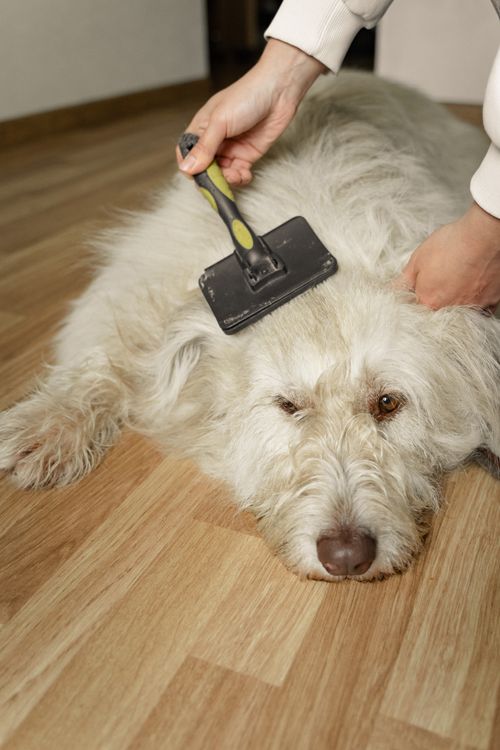
Longer hair often benefits from a comb with teeth long enough to reach through the coat without scraping the skin. Dense undercoats may need a different technique from fine single coats.
Some double-coated breeds should not be shaved without a veterinary reason. Ask a professional familiar with the breed and coat type before making drastic changes.
The five-minute brushing approach


- Let your dog inspect the tool without putting pressure on the body.
- Start with a comfortable spot such as the shoulder or side, if your dog enjoys touch there.
- Make a few gentle strokes with the hair's direction.
- Reward relaxed cooperation; stop before irritation or frustration.
- Check your dog's skin for changes as you work.
Try small, frequent sessions rather than saving all grooming for a stressful marathon.
What to check before buying
- Is the brush intended for your dog's actual coat type?
- Are the bristle tips comfortable and free of damage?
- Can you clean trapped fur from the tool without bending sharp parts?
- Is the handle easy to control with gentle pressure?
- Does the manufacturer explain which coat types to avoid?
Safety note: sudden hair loss, sore skin, significant itch, unusual odor or painful lumps warrant veterinary advice. A brush cannot treat an underlying health problem.
Is a slicker brush right for every dog?
No. Slickers are often useful for curly or tangle-prone coats, but may be unnecessary or irritating for some short coats.
Should I brush against the hair growth?
Follow the guidance of a qualified groomer familiar with your dog's coat. For most gentle home maintenance, working with the coat's direction is a sensible starting point.
Are expensive deshedding tools automatically better?
No. Fit, technique, maintenance and suitability matter more than price.
For help cleaning hair after grooming, read how to remove pet hair from sofas and clothing. For outdoor equipment, our dog harness guide covers rubbing and strap placement.
Bottom line: Choose for coat type, brush gently and stop before grooming becomes a struggle.
To compare brush types and grooming accessories, explore dog grooming tools. Choose based on coat texture and comfort, not the biggest deshedding claim.
Comments
No comments yet. Be the first to contribute.
Related stories
Pet care information is general guidance. Contact a veterinarian for health concerns.

Care guides · Dog care & walking
Senior Dog Mobility at Home: 12 Ways to Help an Aging Dog
Help a senior dog move safely at home with non-slip floors, lifting harnesses, accessible beds, vet-backed tips and a practical mobility checklist.
Read story →
Care guides · Dog care & walking
72-Hour Pet Emergency Kit: Dog & Cat Go-Bag Checklist
Build a 72-hour pet emergency kit for dogs and cats. Get a practical go-bag checklist for storms, power outages and evacuations, plus CDC-backed tips.
Read story →
Buying guides · Dog care & walking
Best Reflective Gear for Walking a Black Dog at Night
Walking a black dog at night? Compare reflective harnesses, visible leashes, LED accessories and handler gear with practical safety checks.
Read story →