Buying guides · Cat care
How to Choose the Right Cat Food Bowl: Shape, Material and Height
A practical guide to choosing a cat food bowl: shallow vs deep, ceramic vs stainless steel, raised bowls, cleaning and signs your cat dislikes the setup.

The bowl is clean, the food is fresh, and yet your cat keeps pulling pieces onto the floor. Before buying a more expensive food, look at the dish itself. A bowl can be awkward because its sides are high, its base slides, or it is difficult to keep clean. The best cat food bowl is the one your cat eats from comfortably, not the trendiest shape.
Start with how your cat actually eats


Watch one ordinary meal. Does your cat approach confidently or circle the bowl? Does the dish move across the floor? Does your cat carry kibble away from the rim? These observations are more useful than assuming every cat needs the same design.
Try a wide, fairly shallow dish if your cat seems uncomfortable with a deep one. A broad surface leaves room around the muzzle and whiskers. You may hear this described as "whisker fatigue," but evidence for that specific diagnosis is limited; treat the shallow dish as a low-cost preference test, not a medical treatment.
For wet food, a plate-like rim may make the last bites easier to reach. For dry food, a modest lip helps contain kibble. For enthusiastic eaters, stability matters more than decorative patterns.
Bowl-choice matrix: match the dish to the behavior
Use an observable problem, not the bowl's price, to decide whether to change equipment.
| Observation | Low-cost comparison | Buyer check |
|---|---|---|
| Kibble spills over a tall rim | Offer the same portion on a wide, shallow dish | Usable width and rim height |
| Dish slides across the floor | Try a washable nonslip mat | Base stability on your actual floor |
| Wet food stays stuck in corners | Try a smooth plate with a low lip | Rounded corners, washable finish |
| Bowl has chips or deep scratches | Replace the damaged bowl | Surface condition and material |
| One cat blocks another at mealtimes | Feed in separate locations | Independent access to food |
| Sudden food refusal or apparent pain | Ask a veterinarian | Do not assume a new bowl treats illness |
These are practical comparisons, not proof of a medical condition such as so-called "whisker fatigue."
Ceramic, stainless steel or plastic?
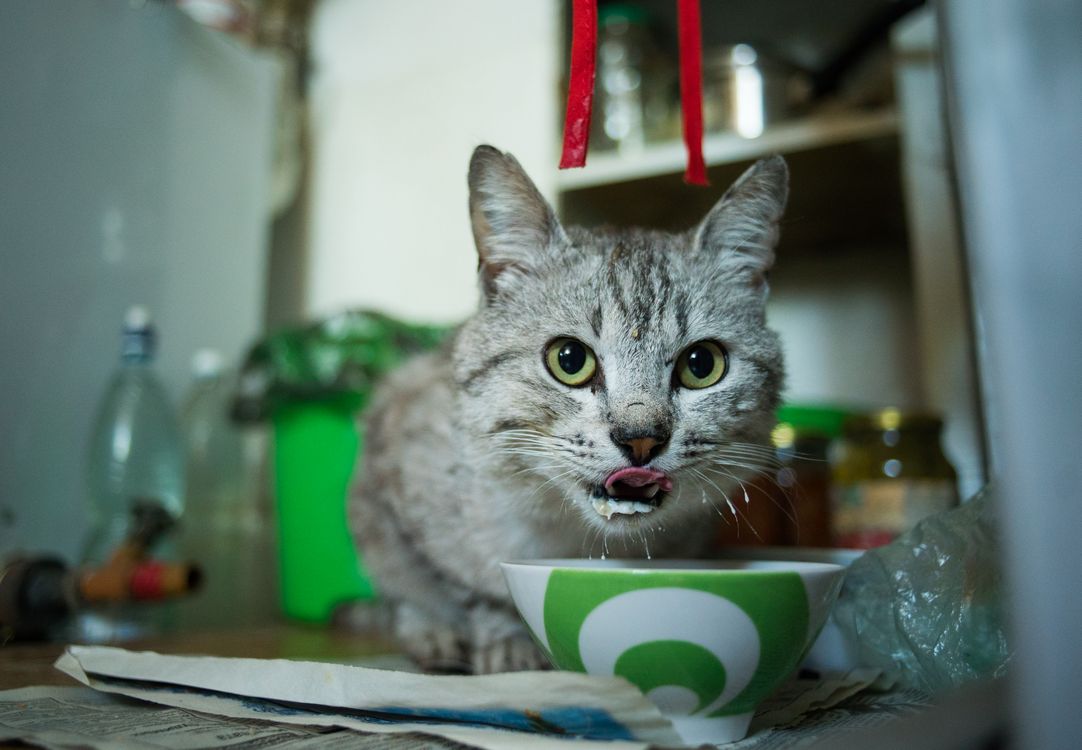
- Glazed ceramic: often heavy and steady, easy to wipe down, and available in shallow shapes. Check for chips and cracks; discard damaged bowls because rough edges and tiny crevices are difficult to clean.
- Food-grade stainless steel: durable, lightweight, and generally straightforward to wash. A nonslip base or feeding mat can stop a lighter bowl from skidding.
- Plastic: affordable and less likely to break, but scratches can make thorough cleaning harder. Replace a worn, rough or deeply scratched bowl.
- Silicone feeding mats: useful beneath a dish, provided they are food-contact appropriate and washable. A mat does not make an unstable bowl safe by itself.
A material label is not a substitute for checking the finish. Avoid strong chemical odors, peeling coatings and mystery decorative surfaces that contact food.
Does a raised cat bowl help?
Raised stands can be convenient for some cats, especially when a stable dish at a comfortable height makes meals easier. But there is no universal ideal height, and a raised bowl is not a proven cure for vomiting, reflux or digestive disease.
If you try one, choose a platform that cannot tip. Let the cat stand naturally without reaching upward or crouching awkwardly. Compare behavior over several normal meals rather than judging from one bite. If vomiting, coughing, drooling, weight loss or refusal to eat continues, contact your veterinarian.
Measure the setup before buying

- Measure the width of the dish at the usable eating surface, not just the outer rim.
- Check the bowl is stable on your actual floor, including when nearly empty.
- Ensure the surface can be cleaned without special equipment.
- Check replacement bowls fit the stand if you choose an elevated set.
- Consider two easy-to-wash dishes so one can be drying while the other is in use.
For households with several cats, separate feeding spots can reduce competition. Watch for a cat that blocks another's access rather than assuming one oversized bowl will solve the problem.
A cleaning routine that takes two minutes
Remove leftovers after meals. Wash the food dish with warm water and dish soap, rinse thoroughly, and dry or let it air-dry fully. Follow the maker's instructions for dishwasher use. A bowl that looks clean may still have a film of food residue around the rim.
Keep water dishes fresh too. If your cat prefers moving water, compare the extra cleaning work of a fountain with an ordinary dish in our cat water fountain vs bowl guide.
Related products
- Browse available pet feeding and water accessories — check sizes, construction and current availability before ordering.
Common questions
Why does my cat eat food off the floor?
The bowl may be deep, narrow or slippery, but some cats simply move food by habit. Try a clean wide plate and observe. A sudden change in eating can also indicate dental pain or other illness.
Are double feeding bowls a good idea?
They can save space, but food and water should remain accessible and clean. Some cats prefer drinking away from food. Separate dishes make it easier to adjust placement.
Is an expensive ceramic bowl better?
Not necessarily. A safe, unchipped, stable and washable bowl of the right shape can cost very little.
A three-meal test and evidence behind this advice
If your cat otherwise eats normally, offer the same food and portion on two different clean dishes across three ordinary meals. Keep location and schedule unchanged. Note whether the cat approaches, pushes food onto the floor, eats comfortably, and leaves food behind. This is an informal preference comparison, not a diagnostic test. Stop if eating changes or the cat seems distressed.
For hygiene, the U.S. FDA recommends washing food bowls with soap and hot water after each use. The American Veterinary Medical Association also advises regular cleaning of bowls and feeding mats. Feline veterinary discussions encourage assessing the individual cat's feeding environment, rather than assuming one bowl design works for all cats.
How this guide was prepared: Kenio Editorial combined published pet-care guidance with a buyer checklist. No bowls were independently tested by Kenio, and this article was not presented as veterinarian-reviewed.
The takeaway
Choose shape and stability first, material second and style last. A simple bowl that your cat uses calmly and you can wash every day is usually the smarter purchase.
Comments
No comments yet. Be the first to contribute.
Related stories
Pet care information is general guidance. Contact a veterinarian for health concerns.

Care guides · Cat care
Why Is My Cat Water Fountain Slimy? Clean the Pump & Filter
Why does a cat fountain feel slimy? Learn how biofilm forms, safe pump and filter maintenance, cleaning schedules and ways to reduce buildup.
Read story →
Care guides · Cat care
How to Cat-Proof a Christmas Tree in a Small Apartment
A small-apartment Christmas tree safety plan for cats: stop tipping, protect cords, remove dangerous ornaments and create safer play alternatives.
Read story →
Care guides · Cat care
Why Does My Cat's Litter Box Still Smell After Cleaning?
Litter box still smells after scooping or washing? Find the source in the litter, tray, mat or floor with a practical cat-safe cleaning checklist.
Read story →